Claude Can Read Your Bank Accounts. What Are You Actually Sharing?
- AI
- Claude
- Personal Finance
- Privacy
- AI tools
- Written by
- Bhargav Tibadiya
- Published
- Reading time
- 7 min read
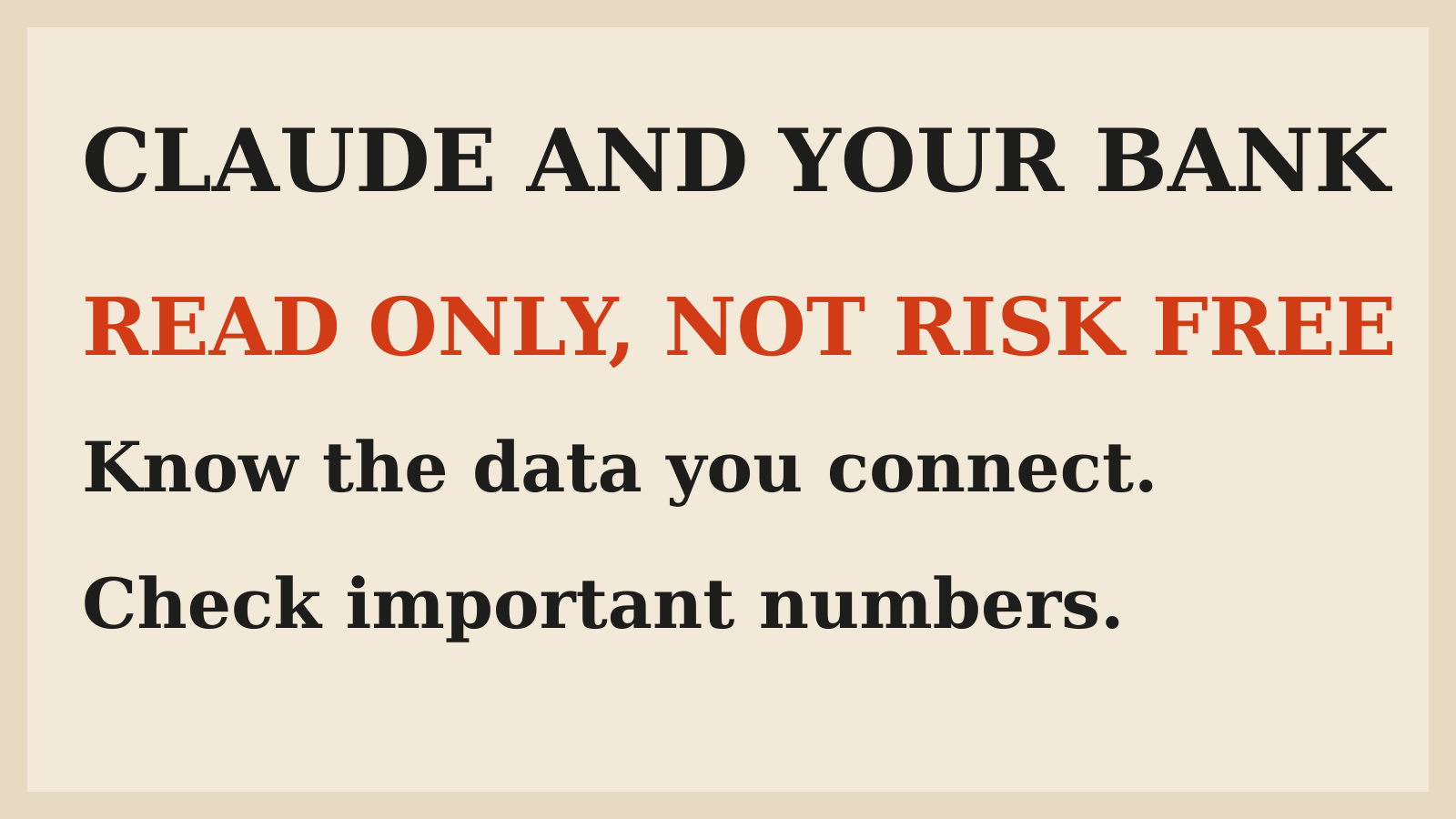
Claude Personal Finance lets eligible users connect bank and card accounts and ask questions about their own balances and transactions. Anthropic introduced it on November 5, 2026, as a US paid-plan beta with read-only access[1].
It cannot move, manage or invest your money. That is a meaningful limit, but it does not make connecting a bank a trivial privacy choice. Transaction history can reveal a lot, and a mistaken answer can still influence a real financial decision.
This guide is based on Anthropic's announcement and current Help Center documentation checked November 10. I have not linked a bank or tested the feature. The workflow examples are proposed ways to review it, not personal account results or investment advice.
First check whether the feature is available to you
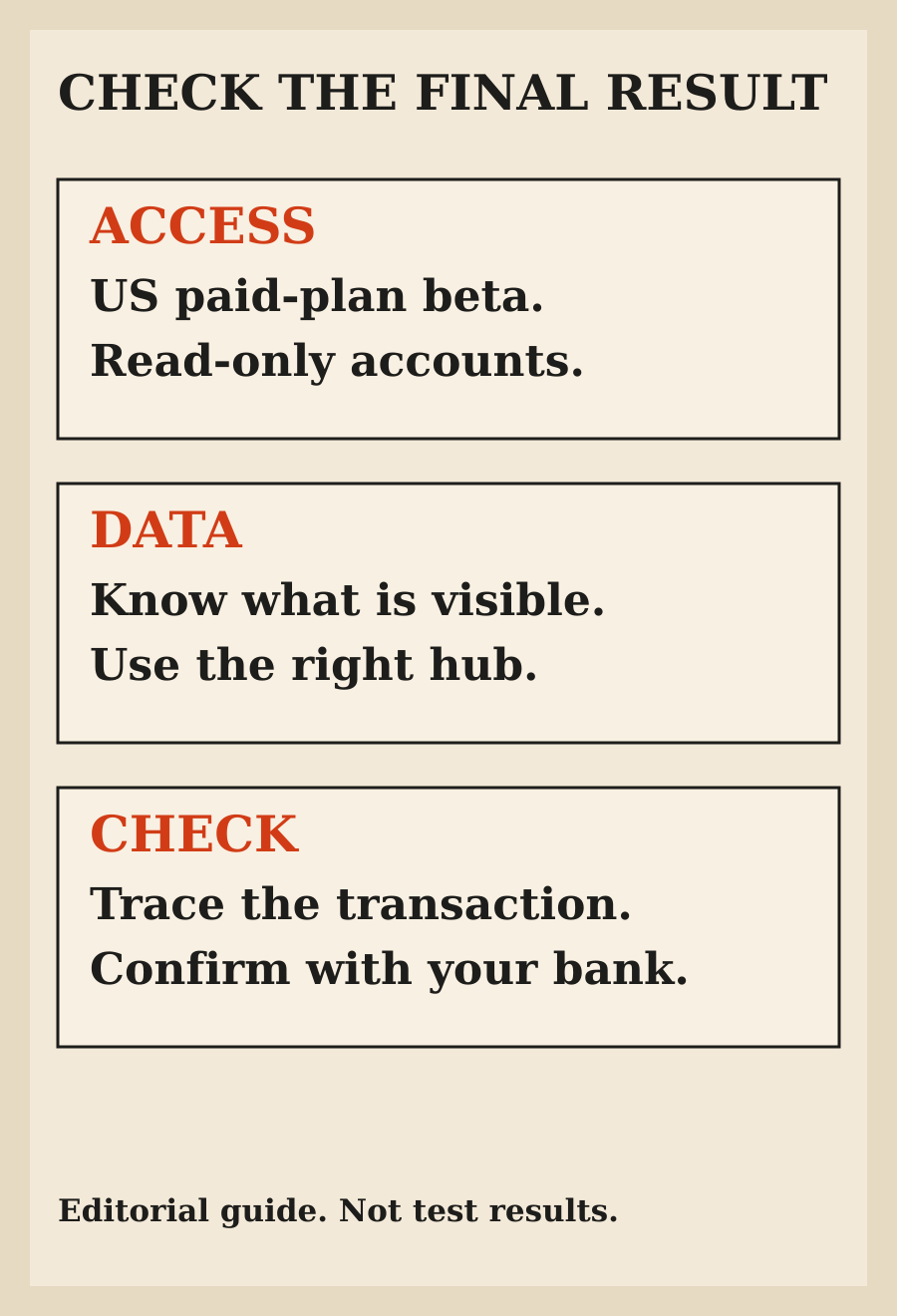
Anthropic says the beta is available on Pro, Max and Ultra plans in the US. Its Help Center says the rollout is gradual, supports US banks only and is not available on Free, Team or Enterprise plans[2].
The documentation lists web, desktop, iOS and Android support, but a supported device does not override plan, region or rollout limits. If the sidebar entry is missing, it may not be enabled for that account yet.
For readers in India, this is not an announcement of local availability. Do not assume a paid Claude subscription or a bank's international presence makes an Indian account eligible.
What connecting through Plaid means
The setup starts in Personal Finance. You choose to link accounts with Plaid, review the requested access, sign in through Plaid and choose the accounts to share. Anthropic says Claude does not ask for or see your bank password[1].
That does not mean no financial data leaves the bank. You are authorizing a connection involving Plaid and Claude. Read the actual consent screens and applicable terms rather than treating the password boundary as the whole privacy story.
A sensible first trial is one account and one narrow question. Decide what you want to learn before connecting more of your financial history. This is a suggested cautious approach, not a requirement in the product's setup flow.
What Claude can see
The Help Center lists bank names, account names and types, the last few account-number digits, balances, credit limits and up to 24 months of transactions. Transaction fields include amount, date, merchant, category and the bank's description[2].
It also warns that a full account number could appear if a bank puts it into an account name or transaction description. The last-four-digits rule is therefore not an absolute guarantee about every piece of text in the data.
For investment, loan and card accounts, the documentation says Claude reads balances and credit limits, not holdings, trades, rates or terms. Do not infer a complete investment-analysis service from the presence of an investment account in the connection flow.
Useful questions are ones you can check
The announcement suggests asking where money went, which subscriptions you are paying for and how spending compares over time[1]. TechCrunch's launch coverage describes the feature as an account-connected financial companion rather than generic financial advice[3].
I would start with a question such as which transactions make up a specific category total for a defined month. Then inspect the transactions behind the number and compare the result with the bank's statement.
A broad question such as whether you can afford a trip needs more judgment. The linked accounts may not contain every bill, cash expense or obligation. A confident answer is not proof that the financial picture is complete.
Read-only does not make every answer current
The Help Center says balances can be a day or two old. It also says accounts linked through multiple logins can be counted twice, and a bank that cannot be read may be omitted from spending figures[2].
Those are practical reasons to check a surprising result before acting on it. A budget can look healthier when a missing bank disappears from the calculation. A duplicate account can distort a total in the other direction.
Ask which accounts and dates the answer covers. Confirm important numbers in the bank's own app or statement. Treat a discrepancy as something to investigate, not something to smooth over with a more persuasive explanation.
The training statement has a boundary
Anthropic says conversations in the Personal Finance hub are not used to train its models. For information shared outside the hub, the user's privacy settings apply[1].
That distinction matters. Do not rewrite it as financial data is never used for training anywhere in Claude. The documented statement depends on where the conversation takes place and the settings that apply there.
The Help Center also says financial data appears in conversation history until the chat is deleted, subject to retention practices, and that Claude's hosting providers and Plaid handle data under the relevant policies[2]. Not used for training does not mean never stored or never processed by a service provider.
Check ordinary chats and shared links too
The Help Center says Claude can read linked accounts in chats without asking each time unless the user changes the Plaid connector setting. It documents ways to turn that access off or, on supported mobile settings, require approval[2].
A shared chat link can show messages and replies containing account figures. Artifacts can also contain financial data, and the documentation warns that any figures in an artifact, including saved ones, are shown to everyone who opens it[2].
Before sharing, inspect the whole chat or artifact. Do not assume that a useful chart is safe to forward simply because the underlying bank connection is read-only. The disclosure happens through the output, not through a transfer of money.
Disconnecting is not the same as deleting old outputs
Unlinking a bank stops Claude from reading its accounts. The Help Center says it unlinks all accounts shared through that bank login rather than one individual account, while existing chat text, artifacts and shared links remain until removed[2].
It also warns that unlinking the last bank resets the dashboard and deletes its widgets, settings and setup answers. That makes disconnecting a real account-management step with consequences, not just a temporary pause button.
Review the current instructions before doing it. If the goal is to stop access and remove prior disclosures, handle both parts: disconnect the bank, then separately review old chats, artifacts and shared links.
This is not an unattended money agent
The current Help Center says linked accounts cannot be used in scheduled tasks, Cowork tasks or Claude Code, and may not be usable in a project. It also says the feature is not designed to give investment advice[2].
Do not build expectations around automatic account monitoring or trading from this announcement. Read-only analysis, background monitoring and transaction authority are different capabilities.
The useful promise here is a simpler way to understand eligible account data. The responsibility to check completeness, freshness and important figures remains with the person making the decision.
My take
Personal Finance could reduce the work of opening several banking apps to answer a narrow spending question. The most useful first test is small and verifiable: one account, one time period and a result you can trace back to transactions.
Before connecting, understand the data scope and the hub's privacy boundary. Before acting, verify important figures. Before sharing or leaving, check the outputs that already contain your financial information. Read-only is a permission limit, not a substitute for those checks.
FAQ
Can Claude move money from a linked bank?
No. Anthropic says Personal Finance is read-only and cannot move, manage or invest money.
Is Personal Finance available in India?
The cited beta documentation limits availability to the US and supports US banks only. This article does not establish India availability.
Does Claude see my bank password?
Anthropic says bank sign-in happens through Plaid and Claude does not ask for or see the bank password. You still authorize financial-data sharing through that connection.
Are Personal Finance conversations used for training?
Anthropic says conversations in the Personal Finance hub are not. Outside the hub, your privacy settings apply. That is not the same as saying no financial information is ever stored.
Does unlinking erase old chats and shared charts?
No. It stops future reads, but information already in chats, artifacts or shared links remains until you remove those outputs. Unlinking the last bank also resets the dashboard.
Did you connect an account for this article?
No. This is a current-source guide, not a hands-on test, personal financial advice or a report of an account connection.
Sources
Elsewhere on this site
Claude Fable 5.2: release, pricing and access separates the model announcement from account-level features and limits.