Claude Fable 5.2 Is Here: What Changed and When to Use It
- AI Coding Tools
- Claude
- Fable 5.2
- AI coding
- AI models
- Written by
- Bhargav Tibadiya
- Published
- Reading time
- 8 min read
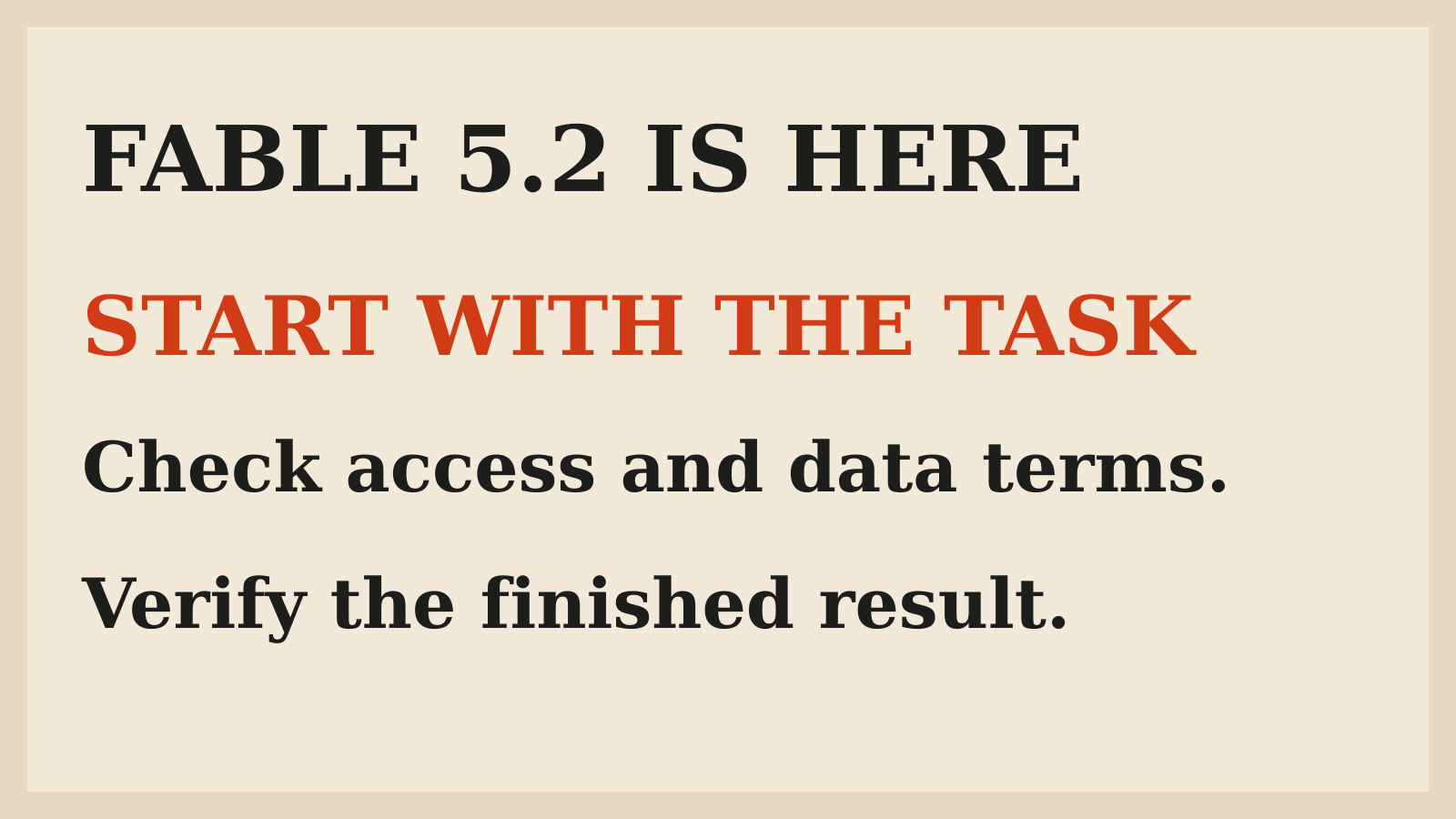
Claude Fable 5.2 is Anthropic's new model for difficult technical work, launched on November 9, 2026. It arrives with Claude Mythos 5.2, lower token prices than the previous Fable generation, and claims of faster output and stronger coding performance. The useful question is not whether it has the biggest announcement. It is whether the work you have justifies using it instead of a cheaper daily model.
My recommendation is to try it on a hard, bounded task that your existing setup has struggled with. Do not move every request to it because it is new. Anthropic's own announcement recommends starting with Opus 5.5 for most coding and knowledge work, then moving up or down according to the task[1].
This is an explanation of the announcement and current documentation checked November 10. I have not benchmarked Fable 5.2, run a migration with it or tested its coding quality against other models. The evaluation examples below are proposed checks, not reported results.
What actually launched
Anthropic introduced Fable 5.2 and Mythos 5.2 together. It describes them as the same underlying model with different safeguards and access. Fable has stronger cybersecurity and biology safeguards that allow broader availability. Organizations doing eligible work in those sensitive areas can apply for Mythos through verification programs[1].
That distinction matters before comparing product names. Mythos is not simply a second model that every Fable user can select. Access to a general model and approval for a restricted offering are different things.
The current Fable model documentation lists the API identifier as `claude-fable-5-2`, with a one-million-token context window and a maximum output of 128,000 tokens[2]. Those limits describe capacity, not a suggestion to send an entire repository or private document collection without checking what the task needs.
Where the upgrade is meant to help
The announcement emphasizes difficult coding, reasoning, vision and long-running technical projects. Anthropic describes internal migrations and other ambitious projects completed during prerelease testing. These examples help explain its intended audience, but they are vendor-reported work, not evidence that your next migration will finish unattended[1].
The Verge's launch coverage independently confirms the release and the general-availability versus vetted-access distinction. Its descriptions of performance improvements are still attributed to Anthropic[3]. Reporting on a benchmark does not turn that benchmark into a test of your codebase.
For a developer, the strongest reason to evaluate the model is a task with enough complexity that better reasoning might reduce failed attempts and review work. A small copy change or routine function does not become a frontier-model task because a newer option appears in the menu.
Faster output is not the same as faster completion
Anthropic says Fable 5.2 and Mythos 5.2 generate outputs up to 30% faster than their 5.1 versions. It also offers an optional fast mode with up to 2.5 times faster token generation[1].
Those are different claims. The first compares generations. The second is a premium operating mode. Neither promises that every project will take 30% less time, or that a multi-hour task will finish 2.5 times sooner.
Actual completion includes reading the project, tool calls, tests, retries and human review. If a model produces a patch quickly but requires a long correction cycle, the visible response speed was not the main cost. Measure the time until an acceptable result, not only the time until the first answer.
What the standard API price means
The announcement and model documentation list standard pricing at $8 per million input tokens and $40 per million output tokens. Optional fast mode is listed at $16 per million input tokens and $80 per million output tokens[1][2].
These are API token rates. They are not a Claude subscription price, an unlimited-use allowance or a flat fee for completing a feature. Subscription access and usage limits should be checked separately in the relevant account.
For a simple illustration, suppose standard-rate usage consists of one million input tokens and 100,000 output tokens. That comes to $8 plus $4, or $12. At the listed fast-mode rates, the same token quantities come to $16 plus $8, or $24. This is illustrative arithmetic, not a measured task bill. Cache treatment, other usage and the platform's applicable billing terms can change a real bill.
A higher token rate can still be worthwhile if it reduces attempts or review time. It can also be wasteful on work a cheaper model handles well. You need the result and the usage record together before making that judgment.
Keep Claude Code and Fable separate
Claude Code is a coding workflow. Fable 5.2 is a model that can be used in supported Claude contexts. Installing a coding tool, selecting a model and giving it permission to change a project are separate decisions.
Record the model and effort setting when evaluating it. The announcement describes Medium effort as the default in Claude apps and Claude Code, while the API model overview lists High as its default effort[1][2]. A comparison that leaves those settings unstated can accidentally compare different amounts of computation rather than different workflows.
Also keep instructions and project state constant. If one attempt gets a clear reproduction, relevant files and a test command while another gets a vague request, the result says little about the model upgrade.
The privacy check belongs before the trial
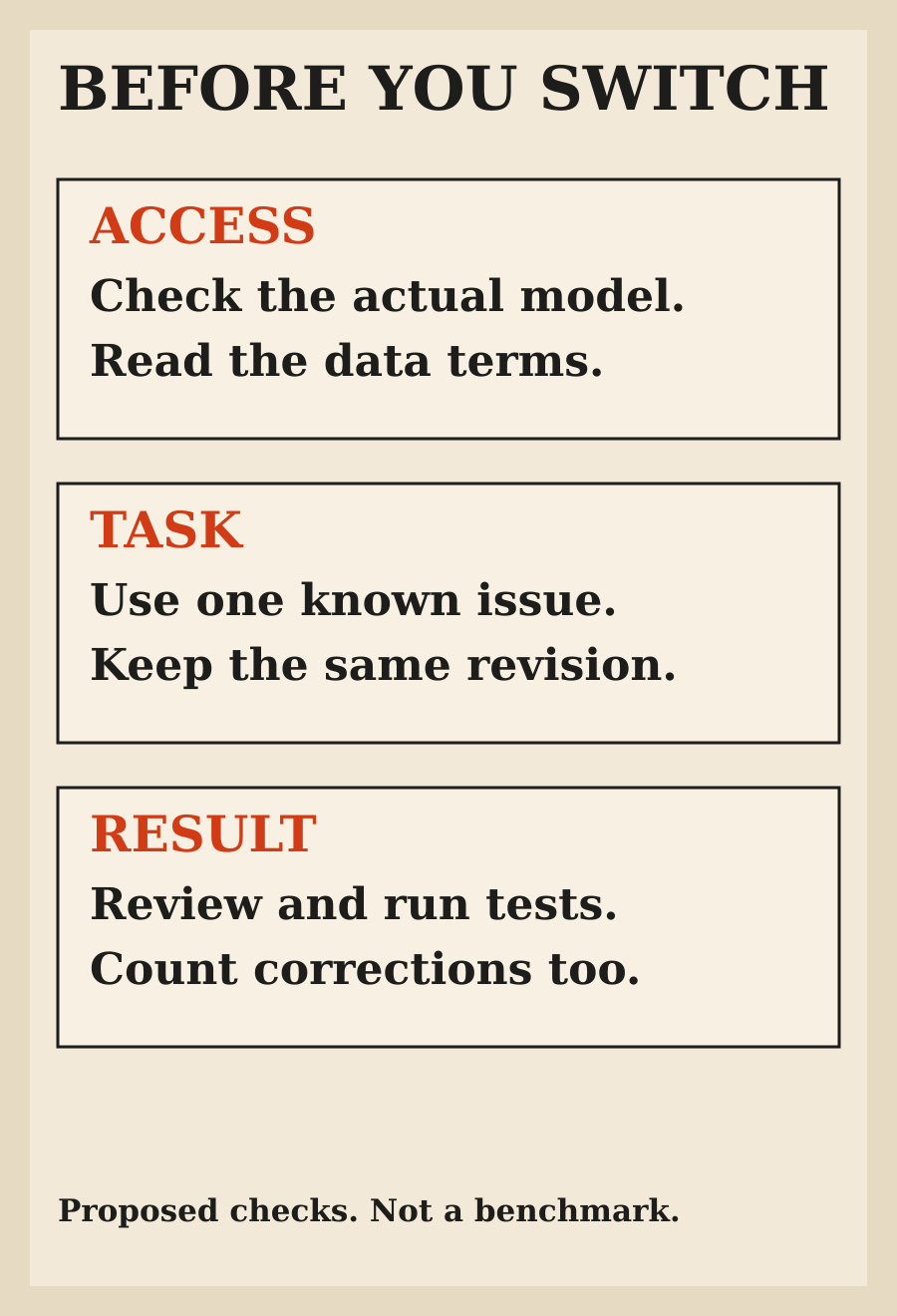
Fable 5.2's current documentation says it requires 30-day data retention and is not available under zero data retention unless Anthropic expressly authorizes it[2]. Do not assume an existing provider agreement automatically applies unchanged to every new model.
The announcement describes Enterprise Frontier Safeguards as a private beta, with eligible enterprise customers able to continue using the models under authorized zero-data-retention arrangements. Other customers have 30-day retention for safety monitoring[1].
For client code, sensitive research or private business records, resolve the applicable terms before sending the material. A larger context window makes it easier to include more information. It does not make that information necessary or approved to share.
Cloud availability still has platform conditions
Anthropic lists availability across its platform and major cloud providers. AWS also published a launch announcement for Amazon Bedrock and Claude Platform on AWS[4].
That is not the same as saying every account, region and integration is ready without setup. AWS describes Fable as a Covered Model and documents a default retention and review arrangement within the AWS boundary. Its instructions include configuring the relevant data-retention mode before invocation[4].
If your team uses a cloud provider rather than Anthropic's direct API, check that provider's model access, regions, billing and data settings. Do not copy one platform's account instructions into another platform's setup and assume the result is equivalent.
What benchmark headlines leave out
Anthropic reports stronger results across several evaluations, including coding and research tasks. The announcement also distinguishes effort settings, safeguards and benchmark-specific methodology[1].
I would not turn those scores into a universal ranking or a promise about a private project. A model can improve on an evaluation while still missing your team's conventions, editing the wrong files or producing a change that fails your acceptance test.
The more useful conclusion is that Fable 5.2 deserves a controlled trial on work where current tools struggle. A vendor's strongest example is a reason to investigate, not permission to skip review.
A practical first trial
Choose one issue with a known starting state and a result you can check. A difficult bug with a reproduction is better than asking the model to improve an entire application. Save a checkpoint before it changes anything.
Give it the relevant environment, what must remain unchanged and the acceptance check. Ask it to separate what it inspected, what it changed, what it tested and what remains uncertain. These are suggested trial instructions, not claims about a completed Fable session.
Then review the full diff and run the check yourself or through a verified execution path. Record tokens, retries, total elapsed time and manual corrections. Compare that result with the existing model on the same project revision if you want to decide whether switching is worthwhile.
A successful trial should make the next decision easier: keep the model for this class of task, adjust the workflow, or stay with the current option. A confident completion message alone does not settle it.
My take on the release
The useful part of Fable 5.2 is the combination of a more ambitious technical-work target, lower standard pricing than its predecessor and broader documented availability. The important limits are just as practical: premium fast mode, restricted Mythos access, model-specific data terms and performance claims that still need testing on your work.
Start with the problem, not the model name. Keep a cheaper daily model where it already works. Try Fable 5.2 when the expected improvement could pay for the extra computation and review. Accept the result only when the actual task is complete.
FAQ
When was Claude Fable 5.2 released?
Anthropic announced Claude Fable 5.2 and Claude Mythos 5.2 on November 9, 2026. This article was checked the following day.
Is Fable 5.2 the same as Mythos 5.2?
Anthropic describes the same underlying model with different safeguards and access. Fable is generally available; Mythos is restricted to organizations accepted through relevant verification programs.
How much does Fable 5.2 cost?
Standard API rates are $8 per million input tokens and $40 per million output tokens. Optional fast mode is $16 and $80 respectively. Subscription plans, usage limits and platform-specific billing are separate checks.
Should I use Fable for every coding task?
No. Anthropic recommends Opus 5.5 as a starting point for most coding and knowledge tasks. Evaluate Fable when the problem's difficulty justifies it.
Does faster output guarantee faster project delivery?
No. Tool calls, retries, testing and human review affect total completion time. The launch's speed figures describe output generation, not a guaranteed project duration.
Have you tested Fable 5.2 yourself?
No. This is a source-based release explainer and proposed evaluation guide, not a hands-on benchmark or a report of a completed project.
Sources
Elsewhere on this site
When an AI agent says done, check the final result explains why a completion message is not enough.
Your AI-built app works. Is it ready for paying customers? covers the checks that still belong before a launch.






