Claude Duet: What Can an AI Assistant Handle While You Are Away?
- AI Coding Tools
- Claude
- AI agents
- Small business
- Productivity
- Written by
- Bhargav Tibadiya
- Published
- Reading time
- 8 min read
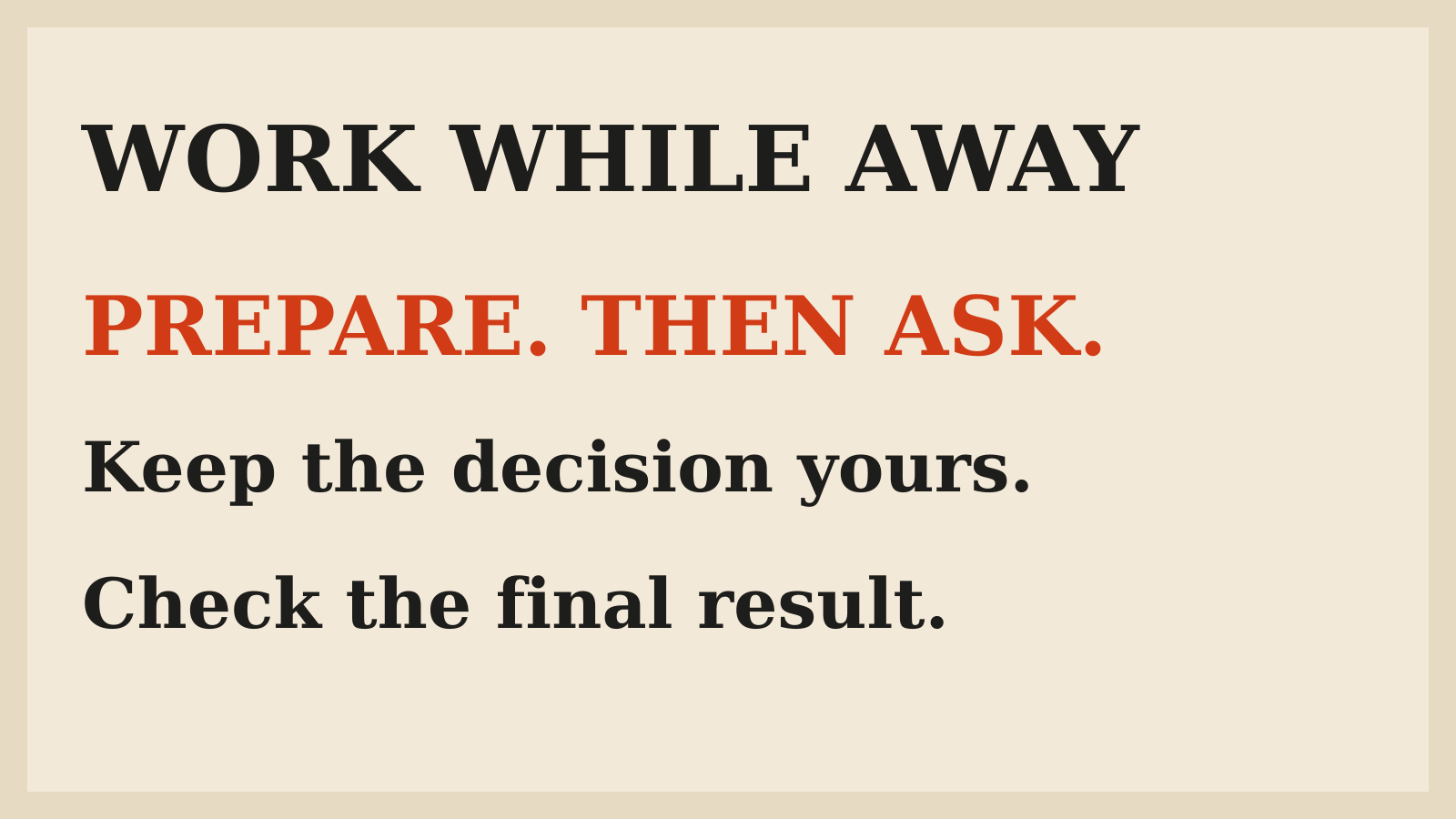
Claude Duet is Anthropic's attempt to make an assistant useful between conversations. It can prepare work, check connected business apps and bring something to your attention without waiting for a fresh prompt. The promise is less chasing, not permission to let a model make every decision for you.
There is an important access limit before any workflow discussion: this is a research preview starting with US Pro, Max and Ultra subscribers through a waitlist. It is not an app everyone can immediately enable, and I would not describe it as available in India without a newer official change[1].
Anthropic announced Duet on October 21, with a safety update dated October 23. This guide checks the published workflow on November 9, 2026. I have not run a business through Duet or measured its reliability. The examples below are ways to evaluate the product, not accounts of tasks I tested.
What changes when an assistant comes to you
A normal chat starts with your question. A proactive assistant also needs to decide when a question, update or prepared result is worth interrupting you for.
Anthropic describes a morning brief across connected apps, periodic checks during the day and tasks that continue while you step away. Its examples include scheduling, dashboards, financial or sales forecasts, prototypes and web apps[1]. That is a work pattern rather than a guarantee that every possible task can be completed.
The distinction matters for a founder. Asking for a draft once may save a little time. Keeping an invoice question or a client follow-up moving over several days can save attention, but only if the assistant recognizes when the underlying situation changed.
It can keep working without your laptop
The official description says Duet has its own virtual machine and browser. Work can continue without leaving your laptop or phone on. It is available as a standalone app on iOS and Android and through claude.ai during the preview[1].
That does not mean it can reach every system you use. A task still depends on the accounts, connectors and permissions available to the assistant. A local file that never reached a connected service is a different situation from a shared document the product can access.
Before handing over a workflow, identify the source it should check and the result you expect. "Prepare tomorrow's client-call brief from the deal notes and latest email" is easier to evaluate than "stay on top of everything."
Start with preparation rather than commitments
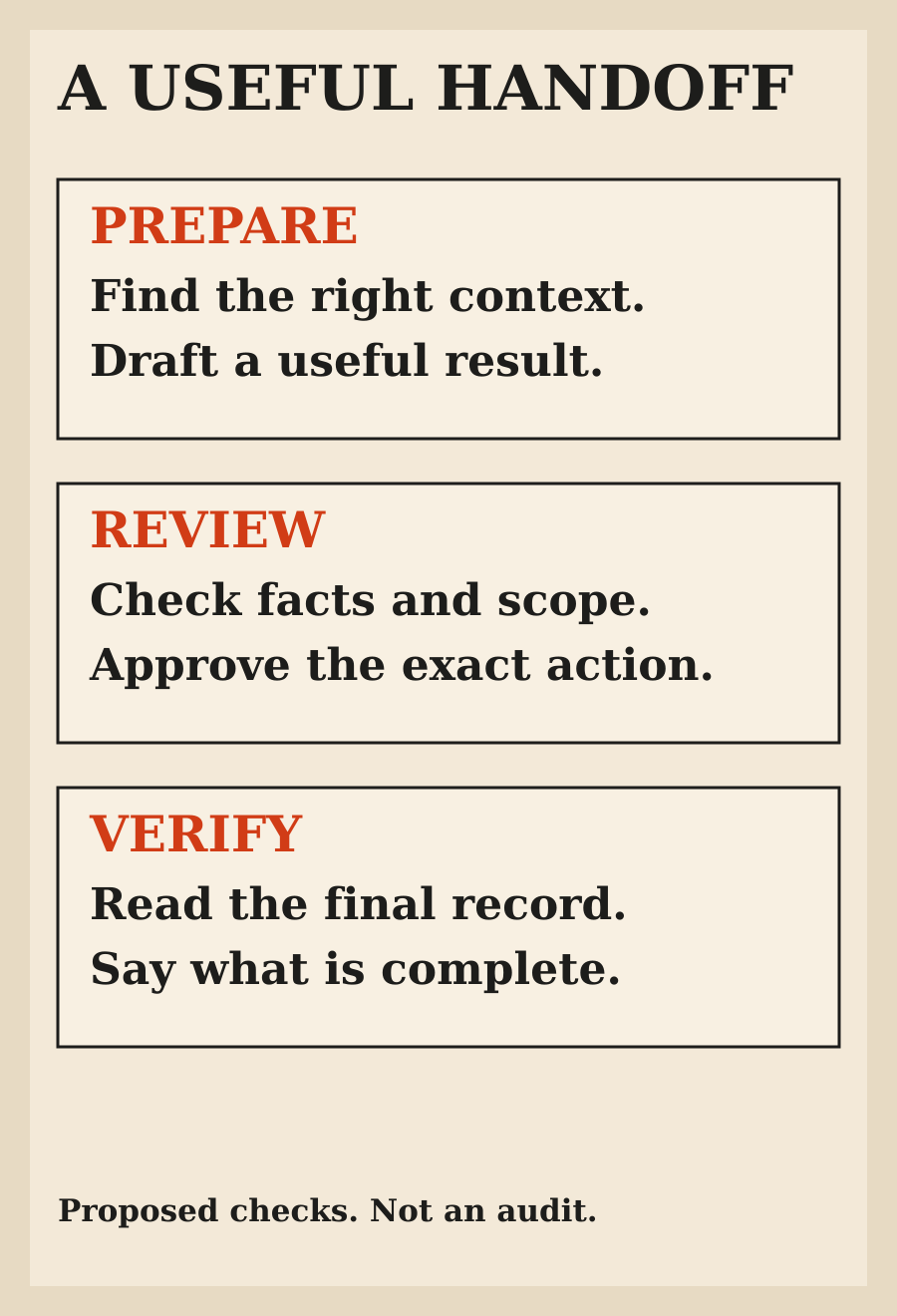
The lowest-risk first job is work you can review before anyone else relies on it. A meeting brief, a draft reminder or a list of overdue items lets you see whether the assistant found the right records and understood the relationship.
For a meeting brief, ask it to distinguish confirmed facts from questions. For unpaid invoices, ask which records establish the amount and status. If it only saw an old email, the result should not sound like a current accounting check.
These are proposed acceptance criteria, not special features I verified in Duet. Their purpose is to make the trial useful: you should learn whether the assistant improves your workflow, not only whether it can produce a polished summary.
Where approval still belongs
Anthropic says Duet can read, draft and prepare work on its own, but shows the planned action and waits for approval before sending a message, making a payment, signing a document or deleting something. Trading securities and moving money between accounts are off-limits even with approval[1].
That boundary is more important than the number of integrations. A draft follow-up and a sent follow-up are different business events. An invoice summary is not permission to pay the invoice. A useful review should make the recipient, amount, file or destination visible before you commit.
When evaluating the product, inspect what the approval actually includes. If the task changed after you agreed, check whether the new step still matches your intention. Do not treat a general request to help with administration as a blanket instruction to act everywhere.
Connected apps need a reason
Duet carries over memory, skills and connected apps from the user's Claude account. Anthropic lists business connections involving Gmail, Slack, QuickBooks, Stripe, Gusto, HubSpot, Canva, Shopify and document-signing workflows among its examples[1].
I would connect the smallest set needed for the first useful job. More access creates more things to understand: which account is involved, what data can be read and whether the product can make changes. A large connector count is not evidence that your particular business setup is supported well.
Keep personal and company contexts distinct. An assistant working across both can encounter similarly named contacts, accounts and documents. Your trial should include checking that it chooses the correct one, especially before a customer sees anything.
Background checking is not continuous monitoring
Anthropic says Duet checks connected accounts every few hours because nonstop checking would consume plan limits faster. Users can tell it what they want to hear about and how often[1].
That makes it useful for some work and unsuitable as the only warning system for other work. A periodic business update is different from a system that must detect a payment outage immediately. Do not replace a time-critical operational alert with an assumption that the assistant is always watching.
Set expectations around the real cadence. Ask what information the result is based on and how recent it is. If a task depends on a last-minute calendar change, a brief prepared earlier may need another check.
Shared limits are part of the product
During the preview, Duet uses the same plan limits as the rest of Claude. Background checks count, and larger jobs such as financial models or presentations require more turns and background work than a short conversation[1].
This changes how to evaluate value. The number of tasks requested is not the same as the number finished. Count useful results, review effort and work left incomplete, then compare that with the usage consumed.
Start with one repeated task and one bounded project. If the background routine uses too much capacity for the value it returns, narrow the sources or reduce the requested frequency before adding more work. That is an evaluation recommendation, not a measured savings claim.
Money still needs a clear final check
Anthropic describes purchases through Stripe's Link and Shopify's Shop Pay. For Link, Duet confirms the item and Link asks the user to approve the spend, with a virtual card used for payment[1].
A payment route does not remove the need to check the order. Review the item, quantity, total, delivery details and cancellation terms at the point of commitment. If the assistant found an alternative, make sure you are approving that alternative rather than the original request.
The same care applies when no money moves immediately. A signed agreement, a customer message or a deleted record can still create an obligation or a difficult recovery. Evaluate those actions by their consequences, not by whether a card was charged.
What the preview does not prove
Anthropic says the early product may misread a thread or misjudge urgency. It also says personal errands such as ticket booking are not as strong as work tasks, and it cannot yet show the user its browser. TechCrunch's coverage makes the same distinction between business work and personal errands[2].
Those are meaningful limits. A successful vendor demonstration is not a measured success rate for your business. The official customer stories show possible uses, not a promise of the same outcome for every account or task.
I would judge an early trial on a small set of real, reviewable jobs. Did it find the right source? Did it ask when a decision was missing? Did the final system actually change when an approved action was taken? Those questions reveal more than whether the assistant sounds confident.
A useful first-week trial
Choose a recurring brief with a clear audience: yourself. Give it a small source set and define what deserves attention. For example, a client-call brief can include the meeting, the latest agreed deliverable and any open question, while leaving unrelated messages out.
Then add one preparation task, such as drafting a follow-up. Review the facts, recipient and tone without sending automatically. Keep a short record of corrections so you can see whether the product learns the shape of your work or repeats the same mistake.
Only expand once the result is dependable enough for the consequence. A proactive assistant earns its place by leaving you with less checking and chasing, not by creating more activity in the background.
FAQ
What is Claude Duet?
It is Anthropic's proactive work assistant. The published workflow includes business-app briefs, background tasks and notifications when work is ready or needs review.
Can everyone use Claude Duet now?
No. The checked announcement describes a research preview starting with US Pro, Max and Ultra subscribers through a waitlist. Do not assume availability in another country or account.
Does my computer need to stay on?
The official description says Duet has its own virtual machine and browser, so background work does not require your laptop or phone to remain on. Access to the necessary accounts and information still matters.
Can it send messages or pay without asking?
Anthropic says it asks for approval before messages, payments, signatures and deletions. Evaluate the exact action shown before approving it rather than relying on a broad earlier request.
Does background work use my Claude limits?
Yes. The preview shares usage limits with the rest of Claude, including background checks and work on larger tasks.
Did you test Claude Duet for this article?
No. This is a guide to the documented product and a proposed evaluation approach, not a hands-on review or reliability benchmark.
Sources
Elsewhere on this site
AI Agents vs Workflows explains when a fixed process is a better fit than open-ended agent work. GPT-6.1 Terra and Computer-Use Agents looks at the economics of background automation.